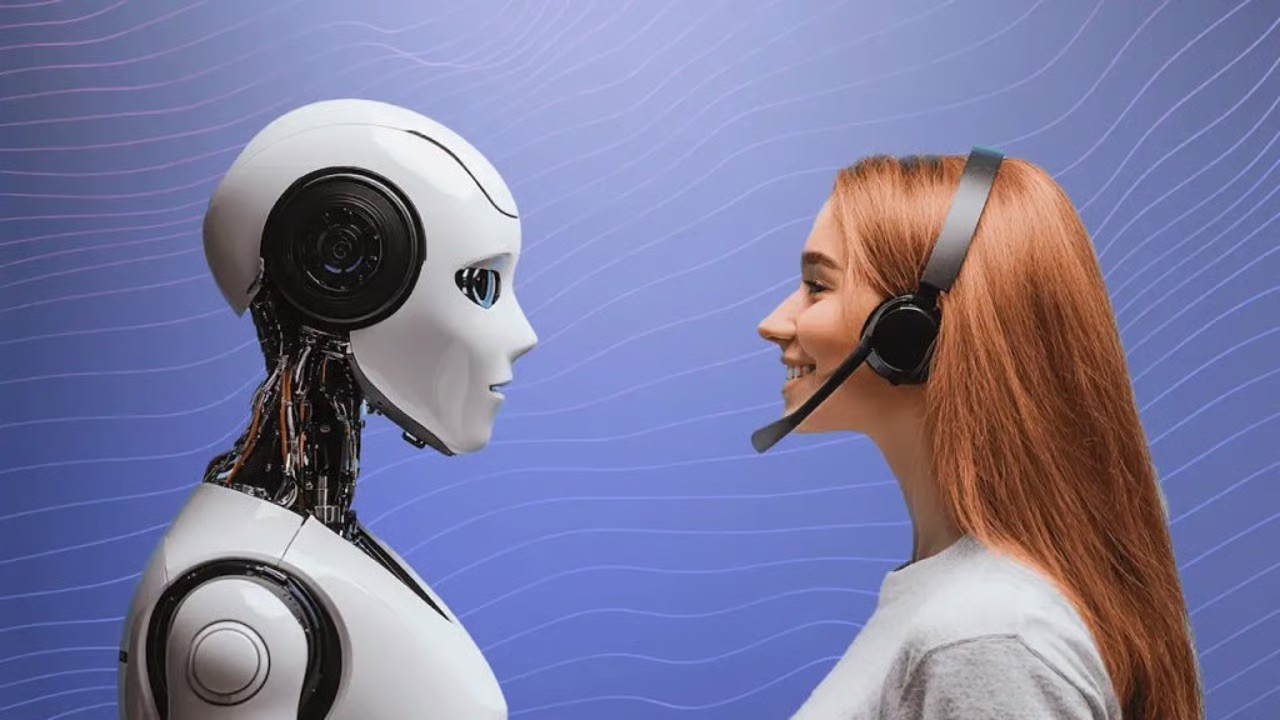
For decades, the answer to "who answers the phones" was straightforward. You hired someone, trained them, and hoped they showed up every day ready to represent your business well.
That model worked because there was no alternative. Today there is. And the businesses that are thinking seriously about their front desk operations are asking a question that would have seemed impossible just a few years ago.
Is a human receptionist still the right choice? Or has the technology finally reached the point where an AI receptionist can do the job better?
The honest answer is more nuanced than most people expect. This guide breaks down exactly where each option excels, where each one falls short, and how to think about the decision for your specific business.
The Core Difference
A human receptionist is a person. They bring personality, empathy, judgment, and the full complexity of human communication to every interaction. They can read a room, sense when something is wrong, and respond to situations with the kind of nuanced understanding that only comes from lived experience.
An AI receptionist is a voice-powered artificial intelligence system. It answers calls, books appointments, qualifies leads, and manages front desk communication automatically, around the clock, without fatigue, inconsistency, or the limitations of a single person handling one call at a time.
The difference is not simply human versus machine. It is a question of what your front desk actually needs to accomplish, and which option is better positioned to accomplish it reliably and consistently.
Where a Human Receptionist Excels
A skilled human receptionist brings things to the job that no AI system can fully replicate today.
Emotional Intelligence
A human receptionist can sense emotional states, respond with genuine empathy, and adjust their communication style in real time based on subtle cues in a caller's voice, tone, and word choice. For businesses where callers are frequently in distress — certain healthcare practices, legal services, crisis-adjacent industries — this matters enormously.
Handling Truly Complex Situations
When a situation falls completely outside any defined process — an unusual request, a sensitive complaint, a high-stakes negotiation — a skilled human can navigate it with the kind of contextual judgment and creative thinking that AI systems are still developing.
Relationship Building
Regular callers often develop a rapport with a human receptionist they recognize and trust. That relationship adds warmth to the customer experience and can strengthen loyalty over time in ways that are difficult to quantify but genuinely valuable.
Representing Premium Brand Experiences
For certain ultra-premium businesses where the experience of every touchpoint is part of the product itself, a highly trained human receptionist can add a layer of white-glove service that elevates the brand.
Where a Human Receptionist Falls Short
The limitations of a human receptionist are real, and in most service businesses they translate directly into missed revenue every single day.
Availability
A human receptionist works set hours. When they are off the clock, calls go to voicemail. In a world where clients book appointments at 9pm and emergencies happen at midnight, that gap in availability is a gap in revenue.
Capacity
A human handles one call at a time. During peak hours, calls queue up, wait times increase, and callers who will not wait simply hang up and call a competitor. There is no way to scale a human receptionist to handle simultaneous call volume without hiring more people.
Consistency
Every human has off days. Energy fluctuates. Moods affect performance. Training degrades over time. The quality of a human receptionist's work varies — sometimes significantly — from one interaction to the next. That inconsistency affects the customer experience in ways that are hard to control.
Cost
A quality receptionist commands a real salary — plus benefits, payroll taxes, training costs, and the time investment of management and oversight. And when they leave, which they eventually will, you start the process over. The total cost of a human receptionist is substantially higher than the salary number alone.
Single Point of Failure
When your receptionist is sick, on vacation, or simply having a difficult day, your front desk suffers. There is no redundancy built into a single human employee. One person calling in sick means calls go unanswered.
Where an AI Receptionist Excels
24/7 Availability
An AI receptionist never clocks out. It answers calls at 3am on a Sunday the same way it answers them at 10am on a Tuesday. Every caller gets an immediate response regardless of when they call, what day it is, or how busy your team is.
Unlimited Capacity
An AI receptionist handles unlimited simultaneous calls. Ten people calling at the same time get ten immediate answers. There is no queue, no hold time, no missed call because the line was busy. The capacity scales instantly with demand.
Perfect Consistency
Every caller gets the same quality of interaction, every single time. The AI does not have off days. It does not get tired, frustrated, or distracted. It delivers the same professional, accurate, on-brand experience on every call, without variation.
Cost Efficiency
The cost of an AI receptionist is a fraction of the cost of a human employee — with no payroll taxes, no benefits, no training costs, no turnover, and no management overhead. The economics are not even close.
Instant Scalability
As your business grows and call volume increases, your AI receptionist scales automatically. There is no hiring process, no onboarding period, no additional cost per call. The system handles growth without friction.
Complete Call Logging
Every single call is automatically logged. Every caller's name, number, reason for calling, and outcome is recorded and accessible to your team. Nothing falls through the cracks. Nothing is forgotten.
Multilingual Service
An AI receptionist serves both English and Spanish-speaking callers seamlessly — critical for businesses in diverse markets like Houston, Miami, and Dallas — without the cost or complexity of hiring bilingual staff.
Where an AI Receptionist Has Limitations
Honesty matters here. An AI receptionist is not the right solution for every situation.
Highly Sensitive Emotional Situations
For callers in genuine distress — a patient receiving difficult news, a client in a legal emergency, someone experiencing a crisis — the warmth and empathy of a skilled human can matter more than speed or availability. AI systems are improving in this area, but a human touch in the most sensitive moments still has value.
Highly Complex or Unusual Requests
When a caller's situation is genuinely unique — outside any defined process or scenario — a human can navigate with creative judgment that an AI system may not yet match. Well-built AI receptionists handle this by recognizing complexity and transferring to a human, but the human is still needed for the resolution.
Ultra-Premium White Glove Experiences
For a small number of businesses where every touchpoint is part of an extremely high-end experience — certain luxury services, exclusive membership businesses — a highly trained human receptionist may still be part of the brand identity in a way that an AI cannot replace.
The Real Question — Is It Either Or?
This is where most businesses get the decision wrong. They frame it as a choice between AI and human — when the most effective approach is almost always a combination of both.
The businesses winning right now are using AI to handle the volume, the after-hours calls, the routine bookings, and the standard interactions — while their human team handles the complex situations, the sensitive conversations, and the relationships that genuinely require a person.
AI handles the process. Humans handle the relationship.
This approach gives you the best of both. The availability and consistency of AI. The empathy and judgment of your people. And it frees your human team from the repetitive, process-driven work that consumes their time so they can focus on the interactions that actually require them.
The Cost Comparison
Let us be direct about the numbers.
A full-time receptionist in a major US market costs between $35,000 and $55,000 per year in salary alone. Add benefits, payroll taxes, training, and management time and the total cost of employment is significantly higher. And that cost buys you coverage during business hours only, one call at a time, with all the variability of a human employee.
An AI receptionist operates at a fraction of that cost — around the clock, at unlimited capacity, with perfect consistency. The return on investment is not marginal. It is transformational for most service businesses.
And that calculation does not even account for the revenue impact of never missing a call. Every missed call is a potential client that goes to a competitor. In high-value service industries, a single recovered client can pay for months of AI receptionist service.
How to Decide What Is Right for Your Business
The right answer depends on your specific business, your call volume, your client base, and the nature of your interactions. Here is a straightforward way to think about it.
An AI receptionist is likely the right choice if:
Your business receives calls outside business hours that currently go to voicemail. You experience missed calls or hold times during peak periods. Your most common calls follow predictable patterns — bookings, FAQs, directions, pricing. You want to reduce front desk costs without sacrificing quality. You are in a competitive market where response speed directly affects conversions.
A human receptionist may still be the right choice if:
Your business handles extremely sensitive calls where emotional support is a core part of the service. Every caller interaction is highly unique and requires complex, creative judgment. Your brand is built around an ultra-premium, white-glove human experience where AI would feel out of place.
A combination is likely the right choice if:
You want 24/7 coverage without the cost of round-the-clock staffing. You want consistency across all routine interactions while preserving human judgment for complex ones. You want to scale your front desk capacity without scaling your headcount.
How On Agency Approaches This Decision
At On Agency, we do not sell AI receptionists to every business that asks. We start by understanding your operation — your call volume, your client base, your team, and your goals.
We design for clarity, reliability, and operational safety. That means building a system that handles what it should handle, escalates what it should escalate, and represents your business with the same professionalism you would expect from your best employee.
We do not sell software. We build systems. And we build them to fit how your business actually works — not how a generic platform assumes it works.
The Bottom Line
The debate between AI and human receptionists is not really a debate anymore. It is a question of how to combine both in a way that serves your business and your clients best.
For most service businesses, AI handles the volume, the availability, and the consistency. Humans handle the complexity, the sensitivity, and the relationship. Together they create a front desk operation that is faster, more reliable, and more cost-effective than either could be alone.
The businesses that figure this out first are not just saving money. They are delivering a better customer experience than their competitors while spending less to do it.
That is a competitive advantage that compounds over time.